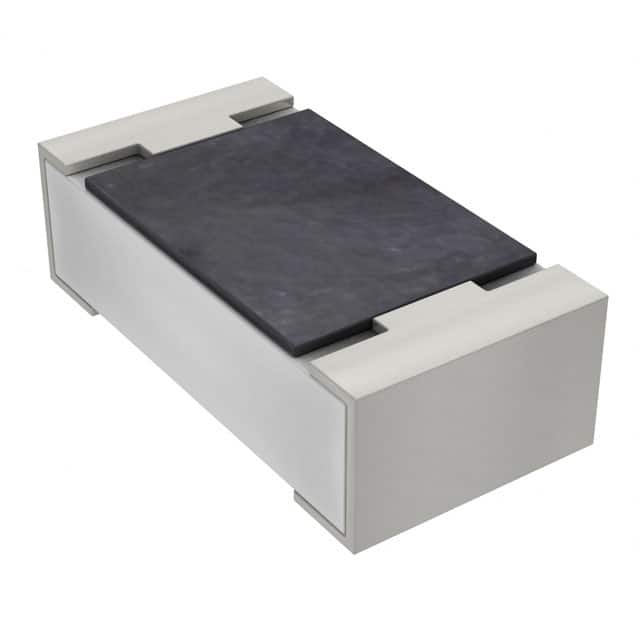
If you're messing with electronics, you're gonna run into resistors. A lot. And the 100-ohm? That little guy shows up everywhere, whether you like it or not.
I get it—at first glance, resistors seem boring—just colorful cylinders sitting on circuit boards. But here's the thing: they're doing all the hard work while flashier components get the attention. The 100-ohm, in particular, is like the utility player of electronics—not glamorous, but try building anything without it.
Today, we're breaking down the following:
What this resistor does
How to read those annoying color bands
Why you'll keep seeing this specific value in schematics
No fluff, just what you need to know. Let's get to it.
The Basics of resistor
So, what exactly is resistor? resistor is the property of a material that resists the flow of electric current. Think of it as a narrow road that cars (current) have to travel through.
The narrower the road, the more resistance there is, and the harder it is for the vehicles to pass through. Resistors are designed to control or limit current flow, and that's where the 100-ohm resistor comes in. It's commonly used when a specific amount of resistance is needed to keep the current in check.
What Color is a 100 Ohm Resistor?

But how do we know exactly how much resistance a resistor provides? This is where the color code system comes into play. A resistor typically has colored bands around it, telling you its value. These colors represent numbers, and you can figure out the resistance by interpreting them.
For a 100-ohm resistor, you'll usually see the color bands as brown, black, brown, and possibly gold or silver. The first two colors represent 1 and 0; the third band tells you to multiply those digits by 10. Suppose you see gold or silver as the fourth band. In that case, a tolerance value indicates how much the resistance can vary.
also read: How to Calculate Voltage Drop Across a Resistor
4-Band vs. 5-Band vs. 6-Band 100 Ohm Resistor Color Code
Now, resistors come in different variations, and you'll often hear about 4-band, 5-band, and even 6-band resistors. The 4-band resistors are the most common and the simplest to read. You have two digits for the value, a multiplier, and a tolerance band. But in more precise circuits, you might encounter 5-band or 6-band resistors.
The extra bands on these resistors provide additional precision, such as the temperature coefficient (how resistance changes with temperature) or more accurate tolerance values. In short, 4-band resistors are great for everyday use, while 5-band and 6-band resistors give you more detailed information for more specialized circuits.
Reading a 100-ohm resistor with the 4-band color code is relatively easy once you understand the system. For instance, if you have a resistor with the bands brown, black, brown, and gold, you can read it like this: brown is 1, black is 0, and brown multiplies it by 10, giving you 100 ohms. The gold band tells you that the resistor could vary by ±5%, which is pretty standard.
But what about 5-band resistors?
In the case of a 5-band resistor, the first three bands give you more digits, allowing for more specific values. For example, a 5-band resistor might enable you to get more granular values, such as 1.00 kΩ or even 2.43 kΩ, necessary when you need higher precision in your circuit design. These are typically used in applications where slight variations in resistance can affect performance, such as in high-end audio equipment or precision instrumentation.
And then there's the 6-band resistor. The sixth band usually represents the temperature coefficient, which tells you how much the resistor's value changes with temperature. This is especially useful when your resistor might be exposed to extreme heat or cold, like in automotive circuits or aerospace technology. A 4-band resistor is more than enough for most everyday projects, but understanding the other types gives you the flexibility to dive into more advanced electronics when ready.
Picking the Right 100 Ohm Resistor
That colorful little 100-ohm resistor in your parts bin might seem simple, but there's more to it than meets the eye. Let me walk you through what matters when selecting one for your circuit.
First up - resistor types. You've got several options:
- Carbon composition: The old-school choice, decent for basic circuits but not super precise
- Metal film: My go-to for most projects - better accuracy without breaking the bank
- Wirewound: When you need serious power handling- think amps, not milliamps
Here's a pro tip: The metal film hits the sweet spot for most hobbyist projects between cost and performance. I learned this the hard way after burning through many cheap carbon resistors in a temperature-sensitive circuit.
Now, about power ratings - this is where beginners often get tripped up. That tiny 1/4-watt resistor might look identical to a 1-watt version, but trust me, they behave very differently when the current starts flowing. I keep a mix of ratings in my workshop because:
1/4-watt handles most low-power needs (LED circuits, signal paths)
1/2-watt works for moderate loads
1-watt+ for power supply sections or current-limiting applications
Remember when I tried using a 1/4-watt resistor in a power supply filter? Yeah... let's just say the magic smoke escaped. Lesson learned: always check the resistance value and wattage rating before soldering.
Troubleshooting and Common Issues
Tolerance is another factor to think about. A resistor's tolerance tells you how much the resistance can differ from its rated value. A 100-ohm resistor with a tolerance of ±5% could be anywhere from 95 ohms to 105 ohms.
For most beginner projects, a tolerance of ±5% is acceptable. Still, you'll want a much tighter tolerance in professional or precision circuits, like ±1% or even ±0.5%.
When you buy resistors, you'll purchase them in bulk. So, where do you find them? Online retailers, hobby stores, and electronic components shops are great places to pick up resistors.
Just make sure you're buying from a reliable source. Hence, you know you're getting quality components that will perform as expected. As you start working on more projects, you'll know what types and brands you prefer based on their performance in real-world applications.
Testing resistors is something you'll do often, and one of the easiest ways to do so is with a multimeter. Just set it to the resistance mode and then connect the probes to each end of the resistor. If the reading matches the value on the color bands (within tolerance), you know the resistor is working as it should. If not, you might need to replace it.
Conclusion
The 100-ohm resistor is simple, reliable, and versatile, but understanding it fully will open the door to more advanced electronic concepts. Whether you're building a simple circuit or a complex one, knowing how to read resistors and how to choose the right one for the job will make a massive difference in your success as an electronics enthusiast or professional. By paying attention to the color codes, materials, and tolerances, you'll be better equipped to design circuits that work how you want them to.