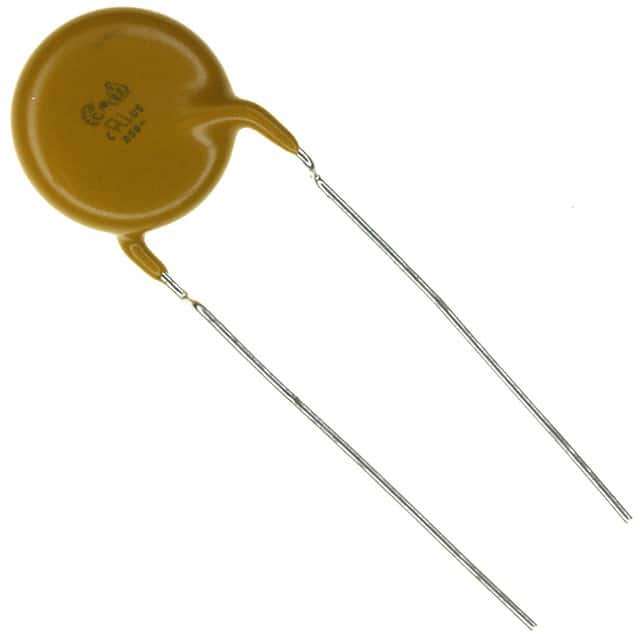
Impedance in AC circuits is crucial for understanding how electronic components behave when alternating current flows through them. While resistors oppose current linearly, capacitors introduce a unique dynamic — both resistance and phase shift. Understanding how to calculate the impedance of capacitors is key to designing efficient circuits.
What is Capacitor Impedance?
Capacitor impedance refers to how much a capacitor resists the flow of alternating current, but it’s more than simple resistance. Impedance includes both magnitude and phase shift. In a purely capacitive circuit, the current leads the voltage by 90 degrees.
Capacitors store energy temporarily in an electric field. They resist changes in voltage, which is why the current shifts when passing through. The formula to calculate this impedance is:

Where:
- Z_c = Impedance (ohms)
- j = Imaginary unit
- ω = 2πf (angular frequency)
- C = Capacitance (farads)
Capacitive Reactance: How It Affects Current Flow
Capacitive reactance measures the resistance a capacitor offers to AC. It depends on frequency and capacitance. As frequency increases, reactance decreases, meaning more current can flow through the capacitor. The formula for capacitive reactance is:

This relationship explains why capacitors are often used to block low-frequency signals and pass high-frequency ones. In practical terms, this means that capacitors are essential for filtering applications, where you need to separate or block specific frequencies from a signal.
Phase Shift and Impedance
Capacitors introduce a phase shift in the circuit. The current in a capacitor always leads the voltage by 90 degrees. This is reflected in the impedance formula. The phase shift is critical when designing filters or power systems.
Impedance is given by:

The negative imaginary component reflects the phase shift. This phase shift is key when analyzing circuits for signal processing, where precise timing of voltage and current is crucial.
Calculating Impedance: A Practical Example
Let’s apply these concepts with a practical example. Consider a 100μF capacitor connected to a 50 Hz AC circuit.
- Step 1: First, calculate the angular frequency:

- Step 2: Calculate the capacitive reactance:

- Step 3: Use this to find the impedance:

This result means the capacitor’s impedance is 31.83Ω, with a phase shift of -90°, meaning the current leads the voltage.
Capacitor Impedance in Practical Circuits
Capacitor impedance is vital in many real-world applications:
- Filters: Capacitors are key in filters that block or allow specific frequencies. In high-pass filters, capacitors pass high frequencies while blocking low ones, using their frequency-dependent impedance.
- Power Factor Correction: Capacitors help correct phase shifts between voltage and current, reducing energy losses in AC power systems. By providing leading reactive power, they improve efficiency.
- Signal Coupling: Capacitors allow AC signals to pass between different stages of a circuit while blocking DC components. This is crucial in amplifiers and communication circuits.
- Tuned Circuits: In RF circuits, capacitors help achieve resonance when combined with inductors.
Impedance Behavior Across Frequencies
Capacitors behave differently at various frequencies, which makes them versatile components in AC circuit design:
- At low frequencies: High impedance, acting as an open circuit, blocking current flow.
- At high frequencies: Low impedance, behaving like a short circuit, allowing most of the current to flow.
- At resonance: Capacitors and inductors cancel each other’s reactance in resonant circuits, minimizing or maximizing impedance.
This behavior is fundamental when designing circuits that rely on frequency-dependent characteristics, such as RF circuits or active filters.
Why Impedance Matters in Circuit Design
The impedance of capacitors isn’t constant—it changes with frequency, capacitance, and the AC signal. This characteristic makes them indispensable in creating filters, tuning circuits, and power factor correction systems. By understanding how to calculate and manipulate capacitor impedance, engineers can fine-tune circuits for optimal performance, ensuring they achieve the desired behavior across a wide range of frequencies.
Capacitor impedance is also crucial when designing circuits for signal processing. A well-designed capacitor can ensure that the circuit only allows specific signals to pass, while filtering out unwanted frequencies.
Conclusion
The impedance of capacitors is a powerful concept in AC circuit design. It helps determine how capacitors interact with alternating currents, affecting signal processing, power management, and filtering. By understanding how to calculate capacitor impedance, you can design circuits that manage current flow, frequency response, and phase shifts more effectively. This knowledge is essential for anyone working with AC circuits, whether for power systems, audio applications, or high-frequency electronics.
Capacitors are more than just passive components—they are active participants in shaping the flow of energy and information in AC circuits. Their impedance is the key to unlocking their full potential.