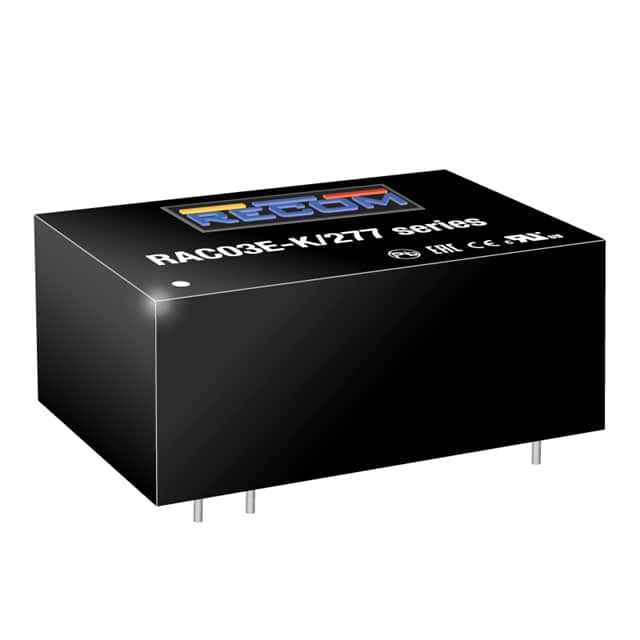
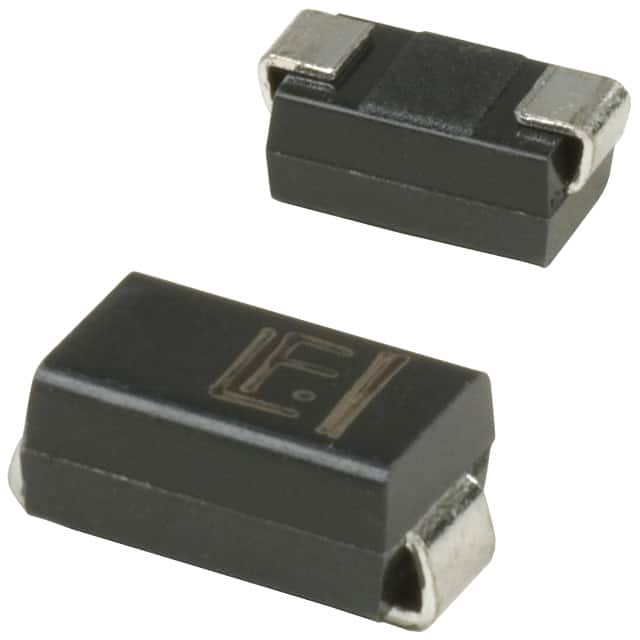
Most electronic devices cannot operate directly on alternating current (AC) from your wall outlet. Instead, they require direct current (DC), which provides a steady, unidirectional flow of electricity. That’s why knowing how to convert AC voltage to DC voltage is essential—whether you’re powering a small LED circuit, charging batteries, or running industrial equipment.
In this guide, we’ll explain the basic principles of conversion, the different methods available, step-by-step instructions, common mistakes to avoid, and answers to frequently asked questions. Let’s get started.
Why Convert AC Voltage to DC Voltage Is Essential
AC and DC are fundamentally different. AC constantly alternates direction, which is ideal for long-distance power transmission but incompatible with sensitive electronics. DC, on the other hand, provides a stable flow of electrons in one direction—exactly what your circuits and devices need.
Here are common scenarios where you need to convert AC voltage to DC voltage:
- Powering LED lighting and low-voltage electronics
- Charging batteries and portable devices
- Running DC motors in tools, appliances, or electric vehicles
- Supplying power to microcontrollers and sensors in DIY projects
If you plug a DC-only device directly into AC power, it can damage components or even pose a fire risk. That’s why conversion is so important.
How to Convert AC Voltage to DC Voltage: The Basic Principles
At its core, converting AC to DC involves three key stages: rectification, filtering, and regulation — each with its own technical considerations. Rectification: A bridge rectifier made of four diodes converts AC into pulsating DC by flipping the negative half of the waveform. Full-wave rectification is preferred over half-wave because it utilizes both halves of the AC cycle, providing higher efficiency and less ripple.
Filtering: A capacitor smooths out the peaks and valleys of the rectified waveform. You can calculate the capacitor value roughly as:
C ≈ I / (f × ΔV)
For example, for a 1A load at 50Hz with a 1V ripple, you’ll need around 20,000 µF. Using multiple capacitors in parallel can help achieve larger capacitance and better filtering.
Regulation: A voltage regulator ensures a stable DC output. Linear regulators are simple and low-noise but less efficient, while switching regulators are more efficient and compact but generate more electromagnetic interference (EMI). Choose based on your application needs.
By understanding these design trade-offs, you can build or select a conversion solution that best fits your project.
Different Ways to Convert AC Voltage to DC Voltage
There are several ways to convert AC voltage to DC voltage, and each involves a slightly different process depending on the equipment you use. Here’s a closer look at how each method works step by step:
Using Ready-Made AC-DC Adapters
This is by far the most accessible and safest way.
How it works:
Check your device’s required DC voltage and current.
Select an adapter that matches or slightly exceeds these specifications.
Plug the adapter into the wall socket (AC side), and then connect the output plug to your device’s DC input.
If possible, measure the output with a multimeter first to confirm proper voltage.
Ready-made adapters already contain a transformer to lower voltage, a rectifier, filter capacitors, and a regulator circuit — all neatly packaged. That’s why they’re ideal for most consumer needs.
Building Your Own Circuit
For DIY enthusiasts and custom projects, building your own circuit offers flexibility — but requires more care.
How it works:
Start with a step-down transformer if you need to reduce high AC mains voltage.
Connect the transformer output to a diode bridge (rectifier) to convert AC into pulsating DC.
Add capacitors in parallel to the output to filter and smooth the voltage.
Include a voltage regulator IC (like 7805 for 5V, 7812 for 12V) to stabilize the output.
This method teaches you the inner workings of conversion, but it’s more prone to mistakes and requires proper component rating calculations.
Using Bench Power Supplies or Industrial Converters
These professional tools are designed for precise, adjustable DC output.
How it works:
Plug the power supply into AC mains.
Use its control knobs or digital interface to set the desired DC voltage and current.
Connect the output terminals to your load — and you’re ready.
These units are built for safety, accuracy, and durability, making them perfect for lab and industrial settings.
In all cases, the process involves the same key stages — stepping down (if needed), rectifying, filtering, and regulating. Choosing the right method depends on your skill level, application, and required precision.
How to Convert AC Voltage to DC Voltage Step by Step
At its core, converting AC to DC involves three key stages — rectification, filtering, and regulation — often preceded by a voltage step-down using a transformer. Let’s break it down step by step, with visual aids to make the concepts clearer.
Step 1: Voltage Step-Down with a Transformer
Most AC mains supplies (e.g., 110V or 220V) are too high for typical DC devices. That’s why many converters start by using a transformer to step down the AC voltage to a safer, lower level (e.g., 12V or 24V AC). This makes the subsequent stages safer and easier to handle.
Step 2: Rectification
Rectification converts the AC waveform into a unidirectional, pulsating DC signal by “flipping” the negative half of each cycle. This is typically done with a full-wave bridge rectifier made of four diodes.
Visual Aid: AC vs. Rectified Output
![[ Sine wave (AC) ] → [ Full-wave pulsating DC ] | Chipmall.com Electronic](https://admin.chipmall.com/storage/tinymce/images/dbfe243fb24ba2807b1419c55ac03fe4686e2d1748004.webp)
Step 3: Filtering
Although rectification removes the negative half of the AC, it still produces a pulsating voltage. That’s where filtering comes in: adding a capacitor smooths out the peaks and fills in the valleys, producing a more constant DC level.
Visual Aid: Before and After Filtering

Technically, the remaining “ripple voltage” (ΔV) is the peak-to-peak variation still present in the DC output. Why is it important to minimize ripple? Because excessive ripple can cause malfunction or noise in sensitive circuits such as audio equipment or microcontrollers. A larger filter capacitor reduces ΔV.
The capacitance required can be approximated with: C ≈ I / (f × ΔV)
where:
I is the load current
f is the AC frequency (50Hz or 60Hz)
V is the desired ripple voltage (smaller ΔV = smoother DC)
For example: if you want less than 1V ripple at 1A load, on 50Hz mains, you’ll need roughly 20,000 µF.

Step 4: Regulation
Even with filtering, the output may still vary slightly under load changes. To ensure a steady, precise voltage, a voltage regulator is added. Linear regulators are simple and low-noise, while switching regulators are more efficient and compact. Which to choose depends on your application — noise-sensitive circuits benefit from linear regulators, while power-hungry systems often use switching regulators.
By understanding these stages — including the transformer’s role at the very beginning — and by visualizing how the AC waveform transforms at each stage, you can see how a chaotic sine wave becomes the steady DC that powers modern electronics.
Common Mistakes When You Convert AC Voltage to DC Voltage
Even though converting AC voltage to DC voltage is conceptually simple, many beginners make critical mistakes that can damage equipment or pose safety risks. Let’s look at why these mistakes happen, and how to avoid them.
Underestimating Power Requirements
Every converter and circuit has a maximum power limit. If your load draws more than what the converter can handle, it can overheat, fail prematurely, or even become a fire hazard.
Always include a 20–30% safety margin when sizing your converter. This accounts for peak loads, heat dissipation, and ensures longer component lifespan. For example, if your device draws 1A, choose a converter rated for at least 1.3A.
Incorrect Output Voltage Selection
Supplying too high a voltage can instantly damage sensitive components, while too low a voltage can cause erratic operation or prevent startup.
Always check the device label or datasheet to confirm the required voltage before connecting.
Overlooking Filter Capacitor Sizing
Using too small a filter capacitor leads to excessive ripple voltage, which may cause noise or instability in sensitive circuits.
Use the ripple formula to calculate capacitance, and always choose a capacitor rated for at least 1.5× the expected DC voltage.
Ignoring Regulator Type
Using a linear regulator in high-power applications leads to inefficiency and heat buildup, while a switching regulator can introduce noise in precision circuits.
Match the regulator type to your application.
Poor Safety Practices
AC mains can be deadly. Exposed conductors, improper insulation, and lack of protective devices increase shock and fire risk.
Always disconnect power when wiring, use insulated tools, proper enclosures, and protective fuses or circuit breakers.
No Output Verification
Some circuits appear to work but deliver unstable voltage, insufficient current, or excessive ripple. Simply measuring voltage isn’t enough.
Fix: Use a multimeter to check both voltage and current output under load, and ideally an oscilloscope to check for ripple and noise. Verifying both parameters ensures your converter performs as expected.
By understanding these pitfalls and their consequences, you can convert AC voltage to DC voltage more reliably and safely.
Standards and Safety When You Convert AC Voltage to DC Voltage
When you convert AC voltage to DC voltage, it’s critical to follow established electrical standards and best practices to ensure safety, reliability, and regulatory compliance.
Here are some key guidelines and standards to keep in mind:
- IEC 60950 / IEC 62368 – International electrical safety standards for low-voltage and IT equipment.
- UL 60950 – North American safety standard widely recognized for commercial devices.
- GB 4943 – Chinese national standard for information technology equipment safety.
- RoHS / CE – European compliance marks indicating adherence to environmental and safety regulations.
Always select components (like capacitors, diodes, and regulators) that are rated for your expected voltage and current, with appropriate insulation and temperature ratings.
Use enclosures and wiring practices that protect against accidental contact with live parts.
Include fuses or circuit breakers in your design as a final layer of protection.
Following these standards when you convert AC voltage to DC voltage not only protects your devices but also ensures your system is safe and legally compliant.
Conclusion
Now you know why and how to convert AC voltage to DC voltage, from understanding the principles to choosing the right method. Always prioritize safety, and don’t hesitate to use ready-made equipment if you’re not comfortable building circuits yourself.
Need help picking the right converter? Feel free to reach out — powering your project the right way starts here.