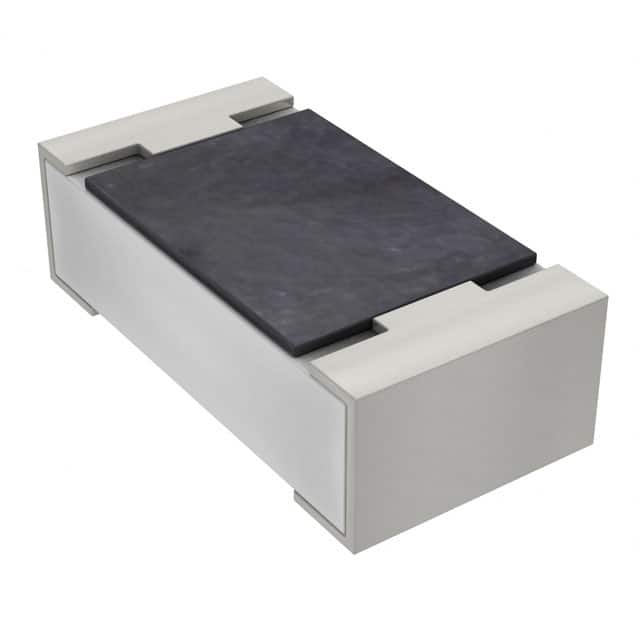
What Are Passive Components? Passive components form the backbone of all electronic designs. They play an essential role in managing electrical energy—they store, release, or dissipate it throughout a circuit.
In contrast to active components like transistors, which require external power sources to amplify signals, passive components utilize existing energy within systems and ensure smooth operations of everything from consumer electronics to industrial machines.
Key passive components include resistors, capacitors, and inductors, each of which plays an essential role in modern electronics component. While they do not generate power themselves, their ability to store, manage and control electrical energy is vitally important in maintaining its functionality and maintaining stability and functionality.
The Core Types of Passive Components
Resistors

Resistors are one of the primary passive components. They regulate electrical current flow to regulate voltage across different components and ensure safe circuit operation.
How Resistors Work: Resistors operate according to Ohm's Law, which establishes a direct relationship between voltage (V), current (I), and resistance (R), as shown by the equation V = IR.
This simple yet powerful principle enables resistors to regulate current through circuits while providing enough energy for all other components.
Types of Resistors:
- Fixed Resistors provide constant resistance values and are widely used across devices.
- Variable Resistors (Potentiometers): Used when variable resistance is necessary, such as volume controls or light dimmers.
- Thermistors: These resistors adjust their resistance based on temperature changes, making them ideal for applications requiring temperature sensing.
Applications of Resistors:
Voltage regulation: Resistors are indispensable components in circuits that require precise voltage division.
Signal adjustment: Signal adjustments help control signal levels and limit current flow to sensitive components like transistors.
Resistors play an integral role in nearly every electronic device imaginable—from light bulbs and radios to complex computer systems—providing proper current management and protecting against potential electrical overload damage.
also read:
Capacitors

Storing and Releasing Energy Capacitors store electrical energy in an electric field before dissipating it when required. They play an essential role in controlling the flow of electrical energy in power supply circuits by smoothing out voltage fluctuations and eliminating unwanted noise.
How Capacitors Work: A capacitor consists of two conductive plates separated by an insulating material known as a dielectric. When voltage is applied, charges accumulate on these plates and store energy. This energy stored is related to capacitance (C), with one potential energy stored being proportional to Q = CV, where Q is the charge and V is the voltage across the plates.
DC circuits use capacitors that become fully charged over time and block current flow; AC circuits use capacitors that constantly charge and discharge in sync with their voltage source.
Types of Capacitors:
- Ceramic Capacitors are cost-effective and widely utilized in low-cost electronic devices.
- Electrolytic Capacitors: Electrolytic capacitors with large capacities are frequently found in power supply filtering applications.
- Film Capacitors: These are known for their reliability and low loss, making them suitable for sensitive applications like audio systems.
Applications of Capacitors:
- Signal Filtration: In audio and radio systems, signal filtration is used in circuits to filter out high-frequency noise that interferes with performance and eliminate unwanted high-frequency interference.
- Energy Storage: Capacitors, such as power management systems, store energy when supply voltage decreases.
- Timing: Capacitors can be combined with resistors to produce circuit time delays.
Capacitors exhibit frequency-dependent behaviour, meaning their performance changes depending on whether AC or DC passes through them. Their adaptability makes them ideal tools for power regulation and energy management.
also read :
Inductors

Harnessing Magnetic Energy Inductors are passive components that store energy when current flows through them. They're frequently employed in filtering applications to block high-frequency noise or smooth out electricity flows.
How Inductors Work: Inductors use electromagnetic induction to resist changes in current. When current passes through an inductor, it creates a magnetic field; any time these changes occur, inductors generate back electromotive force (EMF) against it to control how fast changes take effect - making inductors highly effective in managing the rate changes of current.
Types of Inductors:
- Air-core Inductors: These utilize no magnetic material and are ideal for lower-frequency applications.
- Ferrite-core Inductors: Commonly found in high-frequency applications, such as radio frequency (RF) circuitry.
- Toroidal Inductors: Toroidal inductors are used to reduce electromagnetic interference in electronic circuits.
Applications of Inductors:
Power Supply Filters: Inductors help stabilize voltage by filtering out high-frequency fluctuations, providing reliable power for sensitive components.
Energy Storage: Inductors are widely utilized in energy storage systems, particularly renewable energy systems that use solar panels or wind turbines as a source. They store excess power generated from renewable sources like these into batteries that are stored until needed for later use.
Operation of Passive Components
While active components require an external energy source to function, passive components interact with energy already present within a circuit. They store or limit current flow (such as capacitors), limit current flow with resistors or smooth out fluctuations (inductors) to ensure efficient and stable operations.
- Resistors: Resistor devices dissipate energy as heat to regulate current flow.
- Capacitors: Store energy for later release when necessary, helping to regulate voltage and reduce noise levels.
- Inductors: store energy in magnetic fields and resist changes in current.
Passive Component Market Trends
With demand for smaller, more energy-efficient electronics rising, passive components remain integral to modern technology. A few key trends are shaping this market:
Miniaturization: Devices are becoming smaller without compromising performance, with manufacturers creating smaller but high-performance resistors, capacitors, and inductors to meet this demand. Smartphones and wearables rely heavily on miniaturized passive components to stay energy efficient in increasingly compact designs.
Sustainability: Environmentally friendly manufacturing is on the rise, with increased interest in using recyclable materials and energy-saving designs, such as supercapacitors, which offer eco-friendly energy storage solutions in consumer electronics and renewable energy systems.
Renewable Energy Developments: Passive components like capacitors and inductors play an essential role in stabilizing solar and wind power systems by filtering electrical signals and smoothing out fluctuations, making them crucial components of green energy applications.
IoT and Smart Devices: As Internet of Things devices become more widespread, so does demand for reliable yet compact passive components that meet energy management and signal quality needs in smart home devices and wearables - thus driving innovation in miniaturization and performance.
Conclusion
While passive components do not directly generate power, they play an essential role in the smooth functioning of electronic circuits. Resistors, capacitors, and inductors manage energy flows to stabilize power flow between electronic circuits such as your smartphone and your car's electronics, making sure everything from smartphones to automobiles works seamlessly without glitches or interruptions. With technology evolving further each year, passive components will remain at the core of innovation in shaping the devices of tomorrow.