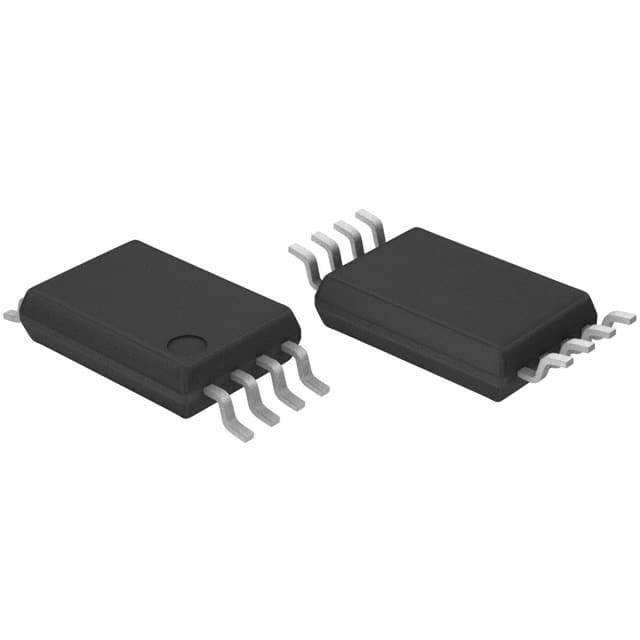
LM358 IC. It's a classic dual op-amp that quietly powers everything from basic sensor circuits to small audio amplifiers.
But despite its popularity, a lot of questions still pop up:
- What exactly does “358” mean?
- Are LM358N and LM358P the same?
- Can I swap it for something else if it’s out of stock or not performing well?
You're not alone if you've wondered about these things. In this article, we'll walk through the use of LM358 IC in practical terms—how to recognize different versions, compare it to similar chips, and pick the best substitute when needed.

What Is the LM358 IC and What Does “358” Mean?
Think of the LM358 as the Swiss Army knife of operational amplifiers—compact, versatile, and surprisingly capable for its size. It's a dual-channel op-amp, meaning it contains two independent amplifiers in a single 8-pin package.
Now about the number—“358” doesn’t stand for a voltage rating or top-secret NATO code. It’s simply part of Texas Instruments’ (and others') numbering convention. The “LM” prefix refers to “Linear Monolithic,” indicating the chip’s analog nature. The “358” designates the dual op-amp version within a broader family. For example, LM324 is its quad-op-amp cousin.
This IC is especially beloved in the maker and embedded systems community for a few reasons:
- It can run on a single supply voltage (no need for dual ± power rails)
- It has low power consumption
- It plays nicely with microcontrollers like Arduino and ESP32
In short, it’s dependable, forgiving, and available everywhere—from online marketplaces to old-school electronics drawers.
Understanding LM358 Part Numbers: P, N, D
You might have noticed that LM358 often comes with different letters tacked onto the end—like LM358N, LM358P, or LM358D. These aren’t just random—they actually mean something useful, especially when you’re choosing the right chip for your project.

LM358N vs LM358P vs LM358D
LM358N: The most common version you’ll find. It comes in a DIP-8 package—the kind that fits perfectly into a breadboard.
LM358P: Very similar to LM358N. The “P” often shows that it’s made by Texas Instruments, but the functionality is the same.
LM358D: This one’s smaller and made for surface-mount PCBs—ideal if you're designing a compact or commercial circuit board.
LM358 Series Variants and What They’re Good At
LM358 isn’t just one chip—it’s more like a family of related chips, each designed for slightly different needs:
- LM358A: Think of this one as the “more precise” sibling. It has lower voltage error (input offset), making it great for accurate readings in sensors or measurement devices.
- LM358M: This is the tough guy—housed in a metal can for rugged environments like factories or military equipment.
- LM358ST: Tailor-made for automotive use. It handles wide temperature swings and keeps working in rough conditions.
- LM358B / LM358BA: These are the next-gen versions. They offer:
Better voltage range (up to 36V)
Lower power use
Less noise and more stability in messy electrical environments
They even come with built-in protection against static and interference. Ideal for industrial spaces where things can get electrically noisy.
Not all LM358s are created equal. If your circuit needs high precision or runs in tough environments, one of these variants might be your best bet.
LM358 vs Other Popular Op-Amps: Key Technical Differences
Sometimes it’s helpful to know where LM358 stands in the op-amp crowd. Let’s compare it with a few other well-known chips.
LM358 vs LM741
Ah, the LM741—the old-school op-amp that refuses to retire. It’s been around for ages, but when you line it up with the LM358, the differences become pretty clear.
| Spec | LM358 | LM741 |
|---|---|---|
| Number of amps | 2 | 1 |
| Power supply | Single 3–32V | Dual ±10–18V |
| Input offset | ~2 mV | ~6 mV |
| Slew rate | 0.3 V/μs | 0.5 V/μs |
| Power usage | Low | Higher |
The LM358 wins in low-voltage, low-power situations—especially when you’re building with a 5V microcontroller. LM741 still works for basic analog needs, but in modern designs, the LM358 is usually a better fit.
LM358 vs LM324: Which One Should You Use?
LM358 and LM324 are from the same op-amp family and share many similarities—they both work with single or dual supplies, have wide voltage ranges, and are great for low-power applications. But here's the key difference: LM324 is basically four LM358s in one chip. That makes it super convenient when your circuit needs more op-amp channels.
Here’s a side-by-side breakdown to help you decide which one fits your project better:
| Parameter | LM358 | LM324 | Differences & Use Cases |
|---|---|---|---|
| Op-Amps per Chip | 2 (Dual) | 4 (Quad) | LM324 is ideal when you need more channels and want to save space. |
| Supply Voltage Range | 3V–32V (single), ±1.5V–±16V (dual) | Same as LM358 | Comparable, but LM358B/BA supports a slightly wider range. |
| Gain Bandwidth Product | 1 MHz (typical), up to 1.2 MHz (B/BA) | 1 MHz, 1.3 MHz | LM324 might perform slightly better at higher frequencies. |
| Slew Rate | 0.3–0.5 V/μs | 0.7 V/μs | LM324 responds faster, better for signal switching. |
| Input Offset Voltage | 2–3 mV (typical), up to 7 mV | 2 mV (typical) | LM358A/BA versions are more stable for precise measurements. |
| Quiescent Current | ~500 μA | ~500 μA | Similar efficiency, great for battery-powered projects. |
| Output Drive Capability | 20 mA per channel | 40 mA per channel | LM324 offers stronger output, good for driving small loads. |
| Noise Level | 0.4 mV | 2 mV | LM358 is quieter—better for analog sensor front-ends. |
| Input Bias Current | 100 nA | 20 nA | LM324 is better with high-impedance sources. |
If you’re designing something that needs more op-amps in less space—say, signal conditioning on multiple inputs—LM324 is your go-to. But if your priority is lower noise and better voltage precision, LM358 (especially B/BA versions) is the smarter pick.
LM358 vs TL082/TL084: When to Step Up in Performance
If LM358 is the reliable family car, TL082 and TL084 are more like sporty sedans—quieter, quicker, and more tuned for precision. These op-amps use JFET inputs, which makes them great for high-impedance and low-noise applications, such as audio preamps or sensor amplifiers.
| Parameter | LM358 | TL082 / TL084 | Differences & Use Cases |
|---|---|---|---|
| Input Stage Technology | BJT (Bipolar Junction Transistor) | JFET (Field Effect Transistor) | JFET inputs have much higher impedance—great for weak signals. |
| Input Impedance | Relatively low | Several megaohms | TL082 excels in high-impedance signal sensing. |
| Slew Rate / GBW | 0.3–0.5 V/μs / 1–1.2 MHz | 13–16 V/μs / 3–4 MHz | TL082 is dramatically faster—better for audio or fast signals. |
| Noise | ~40 nV/√Hz (higher) | Low-noise design | TL082 delivers cleaner signals, ideal for audio. |
| Crossover Distortion | Can occur | None | TL082 avoids distortion, better sound quality. |
| Quiescent Current | Low (typ. 500 μA) | Higher | LM358 is more battery-friendly. |
| Supply Voltage | 3V–32V (single), ±1.5V–±16V (dual) | Typically ±15V (not ideal for 5V systems) | LM358 supports low-voltage microcontroller systems. |
If you’re building an audio circuit or working with sensitive analog signals that need a fast, quiet amplifier, TL082/TL084 will outperform LM358 by a mile. But if your project runs on a simple 5V supply or battery—and doesn’t need lightning speed—LM358 is still a solid, budget-friendly choice.
Best LM358 IC Alternatives: What to Use and When
Need to replace an LM358 or find something that works even better? You’re in luck—there are several options out there.
Drop-in Replacements and Compatible Chips
| Replacement | What it is | Good for |
|---|---|---|
| LM158 | Military-grade version | Tough environments |
| LM258 | Industrial-grade version | Long-term reliability |
| LM2904 | Automotive version | Vehicles, power systems |
| LM2409 | Low-power alt | Niche, less common use |
| LM358A/P/E/W | Vendor-specific tweaks | Check datasheet for exact features |
These alternatives work in most cases without needing to redesign your circuit:
And don’t forget:
- CA258, HA17904PS: Regional equivalents that perform similarly
- LM324: Four-in-one version of LM358
- LM321: Tiny single-op-amp variant
Choosing the Right Replacement
Not all op-amps are created equal, so when you're swapping out an LM358, keep these in mind:
- Power supply: Does it work with your voltage?
- Pin layout: Are the pins in the same order?
- Output behavior: Can it drive the same kind of load?
- Speed and accuracy: Are you dealing with fast signals or sensitive measurements?
When in doubt, always double-check the datasheet. It’s like the nutrition label for chips—boring but essential.
Limitations of the LM358
The LM358 is a solid choice for many analog circuits. It’s affordable, easy to use, and works well with a single power supply. But like any component, it has its limits—and understanding them will help you avoid surprises in your designs.
The LM358 is a solid choice for many analog circuits. It’s affordable, easy to use, and works well with a single power supply. But like any component, it has its limits—and understanding them will help you avoid surprises in your designs.
Limited Bandwidth and Slew Rate
The LM358 has a typical bandwidth of about 1 MHz and a slew rate of around 0.3 V/µs. That’s totally fine for slow or low-frequency signals, but not great for anything fast or high-frequency. If you try to use it above 1 MHz, you might run into distortion or sluggish response.
Tip: Avoid using LM358 for fast analog signals or high-speed data paths.
Output Can’t Reach the Positive Supply Rail
One common issue: the output can swing close to ground (0V), but can’t quite reach the positive supply. In most cases, you’ll get about 1.5V to 2V less than the supply voltage. So if you’re using a 5V supply, the output might max out around 3V–3.5V.
If your circuit depends on full-range output—like when feeding an ADC—this could be a problem.
Possible Crossover Distortion
In some circuits, the LM358 might show a small amount of crossover distortion, especially around the zero-crossing point of the output. This can happen more often if there’s no load pulling the output toward ground.
Solution: Adding a resistor (like 10kΩ) from output to ground can often improve this.
Sensitive to Power Supply Noise
When using a single power supply, especially with resistor biasing, the power supply rejection (PSR) of the LM358 can drop. This means that noise or ripple from your power source might leak into your signal.
To reduce this:
Use good bypass capacitors (like 0.1 µF + 10 µF)
Keep your power and signal grounds separate
Use a clean layout with short traces
Limited Output Current
The LM358 can typically handle about 20 mA per output channel. That’s enough for small signal tasks, but not for driving things like relays, motors, or bright LEDs directly. Also, it can sink more current than it can source—which means it pulls down better than it pushes up.
Note: If you need to drive heavier loads, use a buffer or transistor stage.
Conclusion
So there you have it—LM358 is more than just a generic op-amp. It’s flexible, reliable, and comes in several handy versions depending on what your circuit needs.
Sure, it’s not the fastest or fanciest chip out there. But for everyday analog jobs—buffering signals, amplifying small voltages, interfacing with sensors—it’s a hard-working classic.
Just remember:
Choose the right version (A, B, ST…) if you need precision or robustness
Know your substitutes (LM2904, TL072, OP07) for specific needs
Always check your datasheets, even if you “know” the part
Because in electronics, as in life, it’s the little things that make the biggest difference.